Guide
Can you cut anti-fatigue matting?
Yes. Foam matting cuts cleanly with a sharp blade, and it arrives on a roll precisely so it can be cut. The part worth getting right is which edge you cut, because a roll has two bevelled long edges and two square ends, and only one of those is meant to be walked over.
Cut across the width, not down the length
Matting leaves the factory as a roll with a bevel running down both long edges. Cut across the roll and those two bevels stay on your piece, while the two cut ends are square. Cut down the length and you have removed a bevel and created a raw edge along the side people step over, which is the one edge that should never be raw.
So the square ends go against something: a wall, a bench plinth, a machine base, another mat. Put a square cut end into open floor and you have made the trip hazard the matting was supposed to remove.
How to make the cut
- A straight edge clamped down, not held. Foam pushes back and a hand-held rule wanders.
- A fresh blade. A blunt blade drags foam rather than parting it, and a torn edge on 12.7 mm is visible from across the room.
- Several light passes rather than one heavy one, cutting on the waste side of the line.
- Let a cold roll come up to room temperature first. Cold foam is stiffer and tears more.
When it is worth having it cut for you
One cut across a 60 cm roll is a five minute job and there is no reason to pay somebody for it. A full roll is a different problem. At 91 cm wide, a roll of 9.5 mm foam weighs 39.97 kg and a roll of 12.7 mm weighs 67.4 kg, and it has to be unrolled flat, held flat, measured and cut square six or seven times before you have your lengths.
Cut to size from us, Elephant Skin at 91 cm is £42.95 per metre€50.05 per metre and Diamond Plate is £77.95 per metre€91.00 per metre. Lengths go in whole metres, from one metre up, because that is how the roll is priced and it means nothing is cut off and thrown away.
The one case where you should buy the whole roll
Above about 15.4 m on the 9.5 mm foam, and about 17.2 m on the 12.7 mm, a whole roll costs less than the same length bought as a cut. A full 18.3 m roll at 91 cm is £662.95€770.20 for the 9.5 mm and £1,342.95€1,561.22 for the 12.7 mm.
Past that point you are better off taking the roll, cutting the pieces you need and keeping the rest. We say so on the product page rather than waiting to be asked, and the price switches to the roll on its own. It is the one moment in this trade where the honest answer and the bigger order happen to be the same thing.
How much do you actually need?
Measure the standing position, not the furniture. A person occupies roughly a metre of standing space at a bench, and matting that runs past the end of the working position is matting nobody stands on. Width is the second question: 60 cm suits a fixed position at a bench, 91 cm covers a position somebody steps back from, and 122 cm covers a run where two people pass.
Questions
Cutting matting, asked and answered.
- Can you cut anti-fatigue matting?
- Yes. Foam anti-fatigue matting cuts cleanly with a sharp blade, which is why it is sold on rolls and cut to size in the first place. The question worth asking is not whether it can be cut but which edge you are cutting, because the two long edges of a roll are bevelled and the cut end is not.
- How do you cut anti-fatigue matting?
- Straight edge, a fresh blade, and cut on the waste side of the line in several passes rather than trying to go through in one. Foam drags and tears on a blunt blade, and a torn edge on 12.7 mm foam is visible from across a room. Cut across the width, not down the length, so the factory bevels stay on the piece.
- Will the cut edge be a trip hazard?
- A square cut end is not a bevel, so put it where nobody steps over it: against a wall, a bench plinth or a machine base. That is why we cut across the width rather than down the length. It keeps the two bevelled long edges, which are the ones people walk over, exactly as the factory made them.
- Is it better to cut it yourself or buy it cut to length?
- It depends on what you are cutting. One straight cut across a 60 cm roll is a five minute job. Cutting an 18.3 m roll into six pieces on your own floor is an afternoon, and a roll at 91 cm weighs 39.97 kg on the 9.5 mm foam and 67.4 kg on the 12.7 mm. We cut by the metre and it arrives ready to lay.
- Does cutting it invalidate anything?
- Cutting a mat yourself is not a fault, but a length cut to your measurement is made to your specification, which is a different returns position from an uncut item. Both positions are stated in full on the returns page.
- How much matting do I need?
- Measure the run somebody actually stands on rather than the length of the bench. A person occupies about a metre of standing space, and matting past the end of the working position is matting nobody is standing on. Then pick the width by how far they step back from the bench.
Or have it cut for you
Set a length and we cut it.
Four surfaces, three widths, any length up to a full 18.3 m roll. The price per metre is published and the cut ends arrive square, for the reason above.
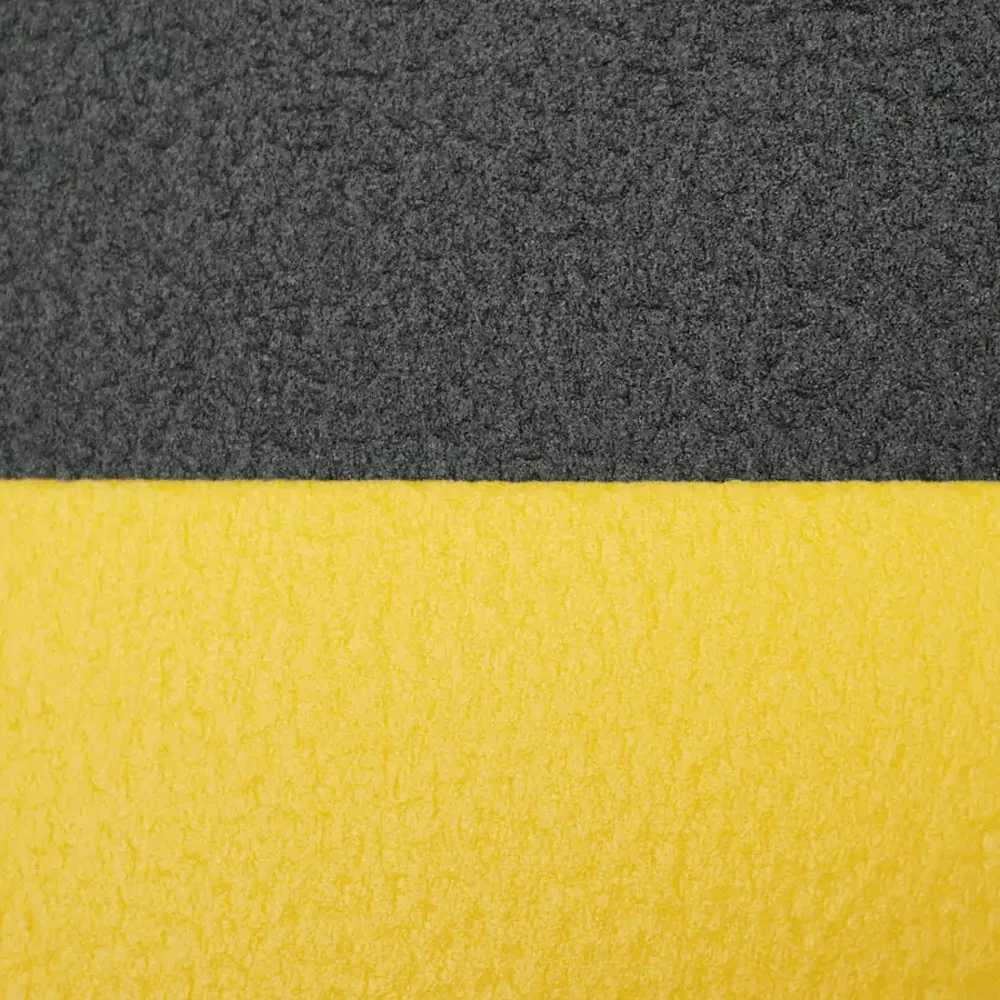 M1 · 9.5 mm
Elephant Skin
Textured black working face, yellow bevels down both long edges.
Light duty, part-shift standing
91 cm, per metre£42.95€50.05Price your run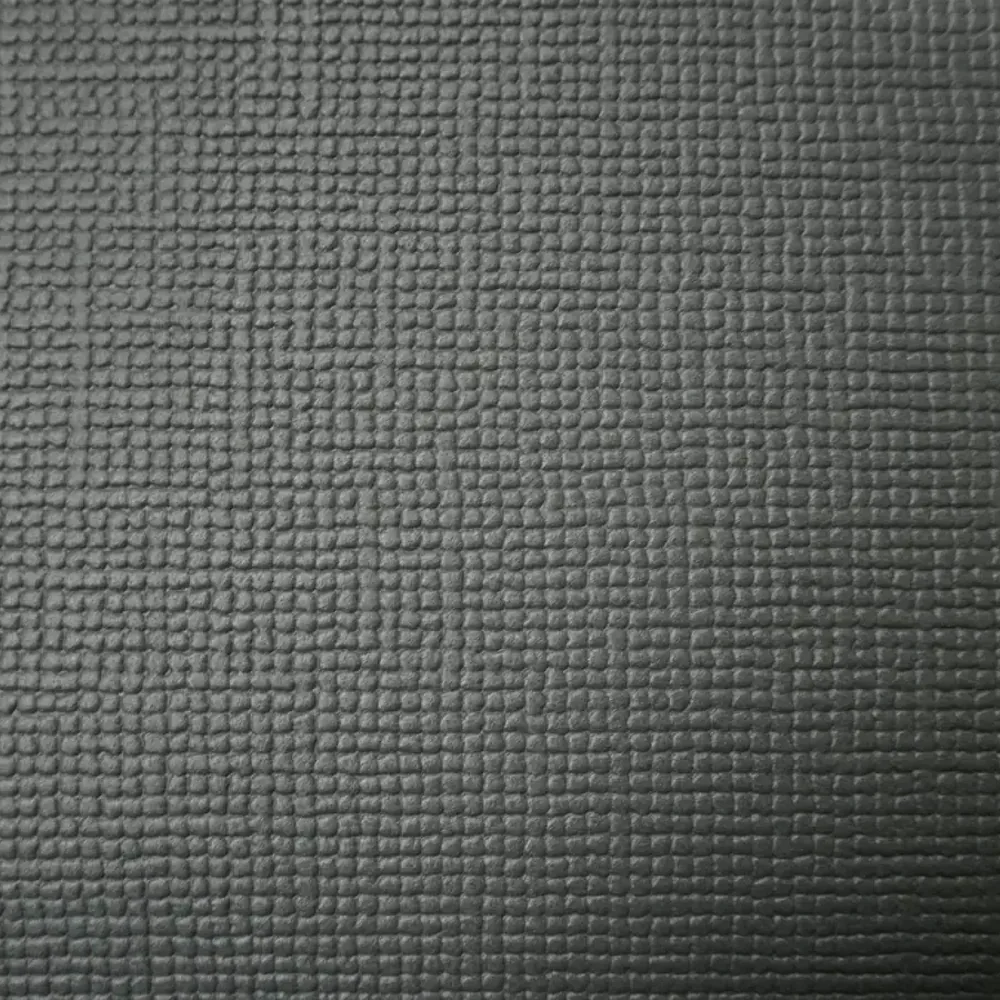 M1 · 9.5 mm
Grid Grey
A fine woven grid face in plain grey, with no edge marking.
Light duty, part-shift standing
91 cm, per metre£42.95€50.05Price your run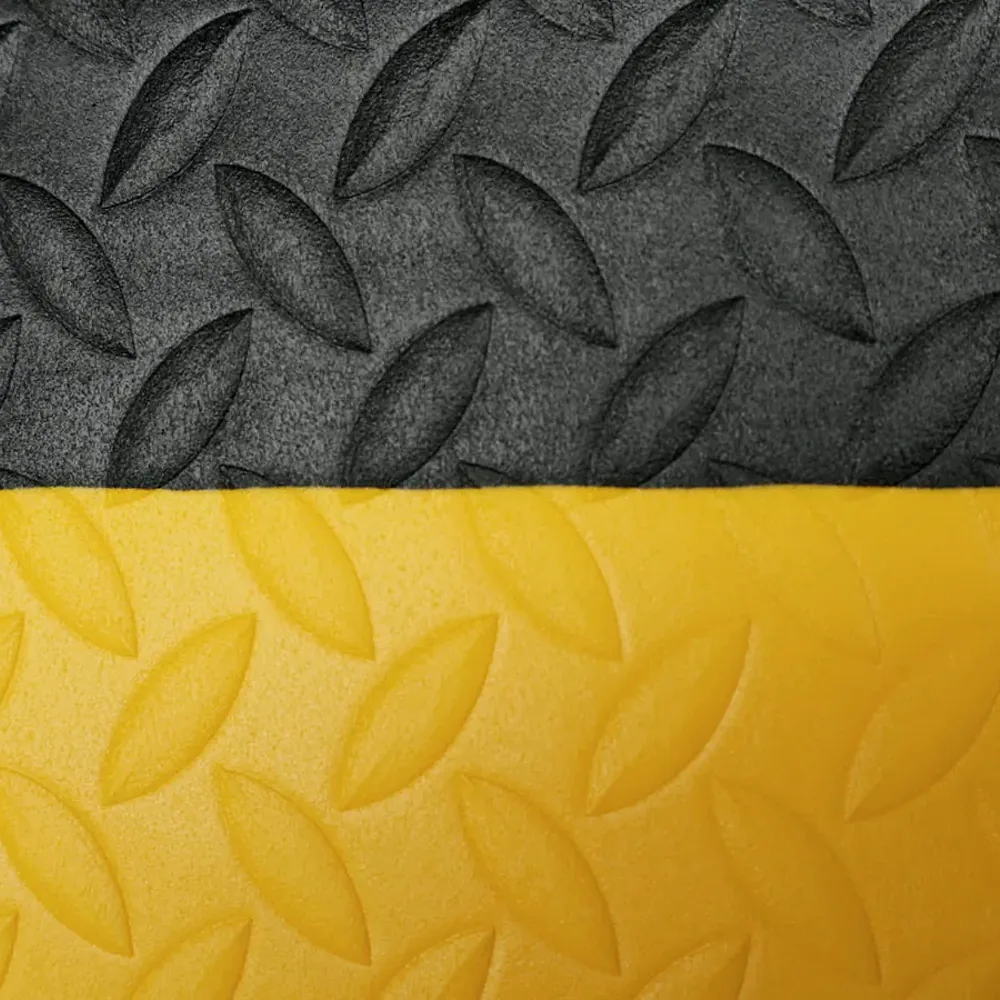 M2 · 12.7 mm
Diamond Plate
The familiar industrial plate pattern, on the thicker foam.
Medium duty, full 8-hour shift
91 cm, per metre£77.95€91.00Price your run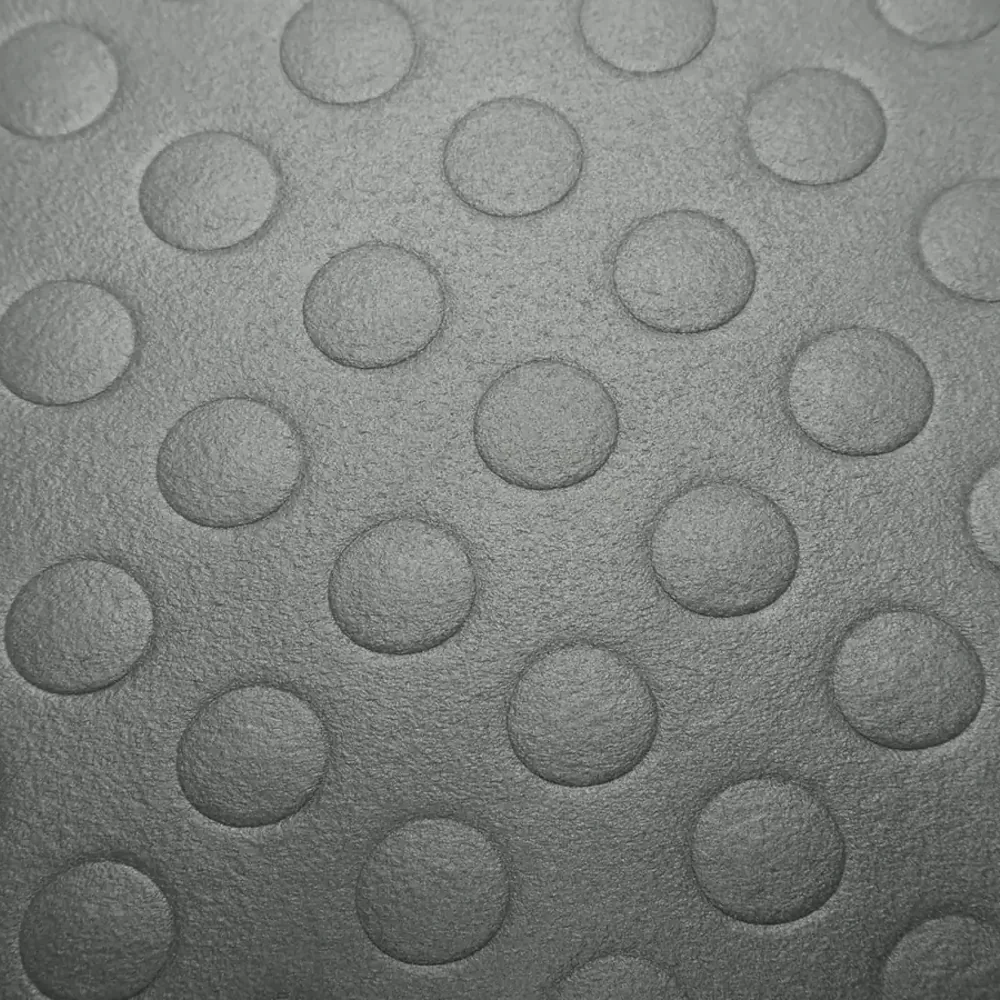 M2 · 12.7 mm
Bubble Grey
Raised discs on the thicker foam, in plain grey.
Medium duty, full 8-hour shift
91 cm, per metre£77.95€91.00Price your run